Search This Blog

Monday, January 20, 2020

Cosa ne pensiamo - la diseguaglianza sociale cresce

"In Italia l'1% più ricco detiene quanto il 70% della popolazione. A pagare il prezzo più alto sono donne e giovani. Oltre il 30% dei ragazzi guadagna oggi meno di 800 euro lordi al mese mentre il 23% degli under 29 versa in condizioni di povertà lavorativa. Crescono gli abbandoni scolastici: peggio di noi solo Spagna e Romania"

Ma vi sembra davvero che questo sistema capitalistico funzioni?
Non credete che sia l'ora di cambiare, drasticamente?

"Ce lo ricorda puntuale come ogni anno Oxfam alla vigilia del meeting annuale del World economic Forum a Davos.   

I Paperoni di Forbes son sempre lì. In 2153, forti di un patrimonio di 2.019 miliardi (dati di metà 2019), vantano  una ricchezza superiore a quella complessiva di 4,6 miliardi di persone, circa il 60% della popolazione mondiale.

Negli ultimi tre decenni la crescita economica su scala globale che pur c'è stata, non ha avuto affatto un carattere inclusivo. Reddito e ricchezza salivano, ma si fermavano al top della piramide" (fonte Repubblica)

In sostanza, i poveri rimangono poveri, i redditi medi vanno verso la povertà, i ricchi - invece - diventano sempre più ricchi. E mettono i poveri l'uno contro l'altro.


Se non vogliamo più questo per noi e per i nostri figli, bisogna cambiare.
Bisogna capovolgere questo sistema.
Bisogna AUDERE.

Cosa ne pensiamo del Green Deal Europeo

Di questi giorni la notizia che è stato varato un piano, chiamato il Green Deal Europeo, che avrebbe la buona intenzione di investire, all'interno dei Paesi UE, ben 1000 miliardi di euro in 10 anni.

L'informazione: A cosa serviranno questi soldi?
Per combattere il cambiamento climatico. L’Unione europea vuole raggiungere la neutralità carbonica entro il 2050, ovvero per quella data l’UE vuole arrivare a un equilibrio tra le emissioni di CO2 e l’assorbimento di carbonio. Si tratta di una necessità per riuscire a contenere l’innalzamento del riscaldamento globale entro la soglia di 1,5° dai livelli pre-industriali.
La prima tappa è il 2030: entro tale data bisognerà ridurre le emissioni dei gas serra del 40% rispetto ai livelli del 1990.
Come afferma il Corriere della Sera nel suo articolo, per raggiungere questo target è necessario trasformare l’economia europea, abbandonando le fonti fossili e incentivando la produzione di energia da fonti rinnovabili oltre che promuovere un’economia circolare.
Correttamente aggiunge che questa transizione non è solo energetica ma anche sociale perché comporterà in alcune regioni più dipendenti dal carbone e dalle fonti fossili dei grandi cambiamenti a livello sociale: motivo per cui è stato istituito il Just Transition Fund, il fondo per una "giusta" transazione.

Le nostre considerazioni
PRO:

Al di là di ogni ragionevole dubbio che si possa avere sull'efficacia di questo piano, va comunque premiata la buona volontà e l'impegno a essere leader nel cambiamento

L'UE sta praticamente chiedendo a tutti gli stati membri di COLLABORARE, di mettersi insieme per IL BENE DEL PIANETA.
E non per una migliore crescita, per abbattere l'inflazione, per incrementare l'occupazione, per risanare i bilanci....NO.

Qui ci troviamo davanti ad un cambio di passo nella leadership europea di portata epocale. Ursula von der Leyen, presidente della Commissione UE, sta provando a dare finalmente un senso alla nostra unione europea, stimolandola a farla diventare un'unione di europei.
Si passa dallo stato-nazione in una geopolitica basata sulla competizione in un gioco a somma zero ad una politica di collaborazione, dove ciascuno fa la propria parte per il bene comune. WOW.

CONTRO:

Il piano vuole rappresentare una "spintarella", neanche troppo decisa, verso una rivoluzione, un cambiamento delle fondamenta della società produttiva che si basa sulla seconda rivoluzione industriale, ossia sulle fonti combustibili fossili (carbone, petrolio). Tutto per il bene comune. Perdonate lo scetticismo ma, nell'Europa degli individualismi attuale, ci sembra poco probabile che ciò accada.

Il Green deal Europeo non è paragonabile al New Deal di Roosevelt: quest'ultimo avveniva in uno Stato pineamente sovrano e con tutti gli strumenti a disposizione per implementarlo.

Noi siamo dell'opinione che cambiamenti di questa portata richiedano un cambio di testa, di paradigma, una politica nuova che vede protagonista attivo il cittadino e la sua comunità e non organi ed apparati e onorevoli dei quali non si sa nulla e continuano ad assorbire soldi che sarebbero meglio spesi a livello locale. Serve uno STATO PRESENTE e non uno Stato fantasma come quello di oggi.

Lo Stato, la collettività, il pubblico hanno il compito di assicurare il benessere dei cittadini, ed è giusto che intervengano nell'economia per farlo. Una regola vera sempre e particolarmente importante in periodi di crisi.

Infine: no obblighi di decarbonizzazione, no stop alla nuova produzione di combustibili fossili, nessun piano per diminuire la morsa dei principali contribuenti di CO2 (carne bovina, trasporti, costruzioni) e obiettivi disallineati con la scienza. Nessun riferimento concreto all'economia circolare, nessun problema rifiuti (scompaiono nel Green Deal?)...insomma nessuna novità. Sembra la solita pillolina con lo zucchero.

IN CONCLUSIONE

C'è un'importante questione sociale da risolvere per poter passare ad un'economia "nuova" e se questo non è ben pianificato, salta tutto. L'Europa può dare una direzione ma non ha gli strumenti adatti per imporre il cambiamento, specie se si rifiuta di togliere quel cappio al collo che sono le regole sul deficit. Se così è, se si vuole davvero cambiare, bisogna avere persone nuove, senza compromessi, che abbiano il coraggio di scrivere regole nuove e che abbiano gli strumenti e il tempo per applicarle. 

Bisogna AUDERE.


Wednesday, December 18, 2019

Audere - Perché tutto questo?

Perchè vogliamo provare a cambiare?


Per cercare qualcosa di nuovo e migliore! 
Un buon punto di partenza è chiedersi perché l'attuale sistema di economia politica stia fallendo così ampiamente. Dal punto di vista ambientale, la risposta è che le caratteristiche chiave del sistema lavorano insieme per produrre una realtà altamente distruttiva. 
  • Un impegno indiscusso in tutta la società per la crescita economica a quasi tutti i costi; 
  • Potenti interessi aziendali il cui obiettivo primario è quello di crescere generando profitto, incluso il profitto dall'evitare i costi ambientali che creano 
  • La replica di tecnologie progettate con scarso rispetto per l'ambiente; 
  • Mercati che non riescono sistematicamente a riconoscere i costi ambientali se non corretti dal governo; governi subordinati agli interessi corporativi e all'imperativo di crescita; 
  • Consumismo dilagante spinto da una dipendenza dalla novità e dalla pubblicità sofisticata di obsolescenza programmata; 
  • L'attività economica ora così ampia su scala che i suoi impatti alterano le operazioni biofisiche fondamentali del pianeta
Tutte queste cose contribuiscono a creare un'economia mondiale in continua crescita ma che sta minando la capacità del pianeta di sostenere la vita. E ciò non va per niente bene.

Questa realtà ambientale è fortemente connessa alla crescente disuguaglianza sociale e all'erosione della democrazia e del controllo popolare.

Solo una potente nuova realtà democratica può AUDERE a guidare e regolare l'economia per fini ambientali e sociali, e solo una società che è coesa ed equa è suscettibile di affrontare pienamente sfide condivise come l'ambiente. 

Sfortunatamente, oggi viviamo e lavoriamo in un sistema di economia politica che si preoccupa profondamente dei profitti e della crescita e che si preoccupa della società e del mondo naturale principalmente nella misura in cui è necessario farlo. Basta guardare al mondo finanziario: dall'accordo di Parigi ad oggi, le 33 banche più grandi al mondo hanno investito 1.900 miliardi di dollari in fonti fossili. Alla faccia delle rinnovabili.

Spetta quindi a noi come cittadini OSARE (AUDERE) ed iniettare valori di equità, solidarietà e sostenibilità in questo sistema e il governo è il veicolo principale che abbiamo per raggiungere questo obiettivo.
La definizione delle priorità della crescita economica e dei valori economici è alla base dei fallimenti sistemici e delle conseguenti crisi che il sistema capitalista sta vivendo. Oggi, l'attuale orientamento politico sostiene che il percorso per un maggiore benessere è quello di crescere ed espandere l'economia. Produttività, salari, profitti, borsa, occupazione e consumi devono aumentare. Questo imperativo di crescita vince su tutto il resto. Può minare le famiglie, i posti di lavoro, le comunità, l'ambiente e un senso del luogo e della continuità perché è affermato con fiducia e ampiamente creduto che la crescita valga il prezzo che deve essere pagato per essa. 
Ma ciò non va per niente bene.
La crescita economica può essere la religione secolare del mondo, ma, per gran parte del mondo, è un dio che sta fallendo, sotto-performando e, per quelli nelle società benestanti, sta creando più problemi di quanti ne stia risolvendo.
Il continuo impulso a far crescere l'economia nel complesso mina le comunità e l'ambiente, alimenta una spietata ricerca internazionale di energia e altre risorse, non riesce a generare i lavori necessari, è schiavo di un consumismo imposto dai programmi di obsolescenza programmata. Tutto appesantito da un livello di sfiducia e di insoddisfazione come mai prima.

Audere - è tempo di tanta irragionevolezza civica


Premessa

Se l'attuale sistema di economia politica “capitalistica” funzionasse bene, non ci sarebbe bisogno di metterlo in discussione o cercare un cambiamento fondamentale. Ma non è così. 
Alla domanda su quali dovrebbero essere gli obiettivi chiave della vita economica, molti risponderebbero: "il benessere individuale e sociale, una democrazia migliore e la qualità ambientale". Se così è, l'economia politica di oggi sta fallendo. 
È un fallimento che raggiunge molte sfere della vita nazionale: economica, sociale, politica e ambientale. In effetti, si può dire che il sistema sia in crisi in ognuna di queste quattro aree.

Il momento per OSARE (AUDERE) un cambiamento fondamentale è sottolineato soprattutto dall'urgenza delle condizioni ambientali. Gli scienziati hanno stimato che abbiamo appena 11 anni per trasformare il sistema energetico mondiale, prima che l’incremento della temperatura inneschi reazioni climatiche estreme a catena.

E chi sarà a sopportarne le conseguenze? Principalmente chi sta messo peggio, chi è socialmente svantaggiato o escluso. Come è infatti stato confermato dall'andamento del COP25, dove i ricchi hanno deciso di dare qualche soldo in più ai poveri in cambio dell'indulgenza ad inquinare in maniera indiscriminata e killer.

Per questo la nostra campagna ha due imperativi morali:
L’IMPERATIVO MORALE di affrontare il tema del cambiamento climatico, mettendolo al centro di ogni area della politica, dall’immigrazione al commercio alla politica estera ed ogni altro aspetto della politica del paese e dell’Unione Europea. L'ambiente al centro e non più l'uomo, perchè senza diritto alla sopravvivenza della Natura non ci saranno presto più i diritti umani;

L’IMPERATIVO MORALE  di rimettere in gioco una quantità sempre crescente di persone alle quali questo modello capitalista e democratico ha tolto tutto o quasi. Non vogliamo la migliore democrazia che il denaro possa comprare: vogliamo una democrazia inclusiva che coinvolga i cittadini nelle scelte che impattano le loro comunità.

Tuesday, September 27, 2011

Ethics in Finance


Two things to consider watching this video.

1) These are traders. Overpayed, with no ethics.
2) Goldman Sachs has a great reputation uh?

Enjoy.....

Monday, September 26, 2011

The magic word is "social collaboration"

I keep on thinking how can we achieve a bigger social impact than today.
Charities and NGOs are working hard but yet...what they're doing is not even enough to keep a billion of people away from suffering from starvation, homelessness, some of the most common deseases which turn out to be fatal for them.
There must be a way to do more.
And the more I think about this issue, the more I'm convinced that to reduce such social plague we must align the institutions with big money to people needs. I mean not NGOs or even States, but companies.

Simply, it's not just enough that each of them contributes to whatever social cause. We must convince them that this is one of those cases when joining forces achieves a much better result than the single individual forces put together.
We must find a way to achieve "social collaboration", to help companies to look at the whole "social space" not as a big competition but as a big collaboration environment, where the big picture will help to get better results.

There are plenty of ways to get to this point and some enlightened companies have already begun. Check here.

But it's also about us. What do we do for this.
In our little living space we have a role in our society, some working in others advising companies. Let's bring this "collaboration movement" into the small, medium or big organisations, let's challenge the status quo, let's make them understand that helping others, committing to this, is not just "good conscience" but also a strategic long term advantage.

With some likely profits in mind, perhaps boards may change their view and reach out their suppliers to start a real  and committed social project.
Am I wrong?

Saturday, September 10, 2011

Socially Responsible Investments: is there a market?

I was attending a nice event last week about the ESG market, with well renowned speakers from Goldman Sachs, Unicredit and BoA.
It was very well moderated by Reuters who provided the attendees with a nice piece of research.
Anyway, I found this really interesting study from EUROSIF, which I think it's worth sharing.

"The UK is widely acknowledged as a global leader in sustainable and responsible finance. Its dynamic cluster of sustainable and responsible investment expertise is spread across a range of institutions, including asset managers, investment consultants, investment banks and independent research houses. It was a pioneer in carbon trading and is now a key centre for the carbon markets". (Follows here)

Monday, August 22, 2011

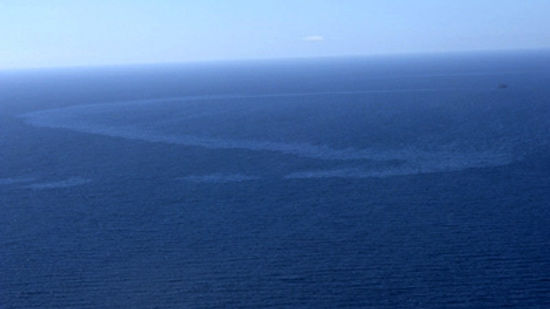
A new lesson from the oil spill

It happened again. Damn. Looks like it's a period of spills. Waste.

This one is not even comparable to what happened in the Gulf of Mexico, but it's quite significant for the North Sea environment. It's been interesting though to follow the press coverage about this for various reasons:
- the second big oil spill in little more than a year
- the second UK company (even though now it's mostly in the NL)
- the second time people face such environmental tragedy
- the first time social media have an history in reporting such news
Now how it worked?

The Guardian was definitely the most active on this front. A live report documenting day-by-day the spill and a significant social media coverage on both Twitter and Facebook.
But apart from this, this spill was quite silent. Not really a great chaos around it.

Do you think it's because an incredibly efficient PR Department at Shell or because North Sea is not as important as Gulf of Mexico?
Or is there any other reason?

I can't give an answer yet, but you're welcome to help me on this!

Monday, July 18, 2011

Is it Google+...a little too much social?

I've just come accross this article, which little shocked me. 
Then I went to check terms and conditions about this brand-new social network and my concerns grew even more.


About privacy, about the data you're giving to Google in exchange ffor the use of its free tools.


First. Google+. Has it a breach?
As you probably know, Google+ organizes members and their connections to each other with “Circles.” This way you can post something to a specific Circle instead of the world at large. The issue seems to be that when you post something to a Circle, any receiving members can repost it with varying levels of privacy, up to and including “totally public.” Alright, so that’s a little disconcerting, but you should be able to turn reposting off, right? You can, but only after the post in question has been published — and you have to do it for each, individual post.


Second. Terms and conditions. They say: 

You retain copyright and any other rights you already hold in Content which you submit, post or display on or through, the Services. By submitting, posting or displaying the content you give Google a perpetual, irrevocable, worldwide, royalty-free, and non-exclusive license to reproduce, adapt, modify, translate, publish, publicly perform, publicly display and distribute any Content which you submit, post or display on or through, the Services. This license is for the sole purpose of enabling Google to display, distribute and promote the Services and may be revoked for certain Services as defined in the Additional Terms of those Services.
On the surface, it seems rather innocuous, intended merely to give Google permission to transmit your data across various networks onto all sorts of mobile devices. However, Google demands extremely broad rights from users. Under what circumstances would you sign a contract giving someone such free range with your intellectual property?


Plus, have a read at this really nice HBR article

Thursday, July 14, 2011

Reputation in Financial Services

On the 29th of June, I’ve been to a very interesting conference, “Reputation in Financial Services”, well organised by Communicate magazine.

I was quite curious to attend as financial services has been – after oil – the most battered sector in terms of trust, reputation…in a nutshell, credibility.

Even though the initial scepticism, I must say that the excellent quality of the speakers almost convinced me that something is changing in the way financial services now approach their customers. I mean, less cash cows and more human beings.

To whom speak about passions, values, love. It sounds cheesy but consider this: as the study by Uffindell pointed out, Apple has been able to create a relationship with their customers based on “love and passion”. 
Jillian Fransen, Barclays Bank
Banks, on the other side, are struggling to invite their customers for a “romantic dinner”. Financial sectors customers indeed seems to constantly looking for the best deal and for them is not really problematic to jump from one bank to another. Banks need to become “sexy & accountable”, and I have to say that banks, in this case, are the only entities to be blamed for this customers’ attitude.

ING was very inspirational: Adrian Simpson, Head of UK Corporate Comms at ING, has outlined the necessity to build a new paradigm in the sector, based on new values. 

Mike Tyrrell, SRI Connect
Banks and financial institutions need to start listening their customers and understanding their real needs and values in this current difficult contingency that the entire world is living. Banks have a responsibility in the community. ING seems to be pretty careful about this topic and his innovation about the use of social media is a clear testimonial.
Personally, I thought that Adrian’s commitment and enthusiasm to topic was pretty interesting to hear. It looked like the sector has started actively to look for new solutions in line with the most innovative consumer trends.
Mr Simpson has obviously underlined also the critical role of CSR as a tool to engage, internally and externally the stakeholders of his company. “ING has the responsibility to do good” has said. The vision he outlined for ING confirmed that acting responsibly would pay off not just in reputation but also in a greater satisfaction of employees that would be likely to be more productive. 
By looking back at Social Media, Adrian has suggested also their importance in their current CSR activities. “We love to speak to our public about our Social Commitment and we would like to engage them in our day by day results”.

Interesting indeed.
Interesting session has been also the one run by Rob Challis from Tangent Synergy about to what extent CSR can be useful to increase the corporate reputation level. Rob has underlined the importance for each company to understand the non-financial risk factors that could undermine corporate performance. 


A big thanks to Liz Foggitt, author of these great shots and to Alberto Campora for his indispensable contribution!

Friday, June 24, 2011

Is nuclear the only alternative? A view from The Economist

On Thursday this week, I’ve been to the Economist UK Energy conference which included some of the most prominent personalities in the world of energy.
CEOs from Centrica, RWE power, Johnson Mathhey together with several academics, helped us all to understand where UK is going in order to cope with the ever increasing demand of energy and if there’s a real alternative today to nuclear power.
I will post later on new interesting videos, in the meantime check this out

Sunday, June 12, 2011

Trust and marketing

Hi all,

I found this very interesting article on Business Respect, which makes a very good point about the misuse of trust and the marketing intelligence when about campaigning to peers.
Very interesting.

"The language of trust is, as far as I can see, the common language between marketers and corporate social responsibility teams. By and large, they have very different perspectives on the dynamics of business but the one thing they will agree on – if you lose trust, your job just got a lot harder.


So one of the core skills of either group, therefore, should be to understand how to build trust with key constituencies. One problem. Trust is not a fixed reference point – a reliable outcome from a set of practiced techniques. It changes and evolves over time.

For instance, the latest version of the Edelman Trust Barometer suggests that there have been significant shifts in who trusts whom since the last one. The headlines tend to focus on how much business is trusted, how much government is trusted and so on.

One of the things I found most remarkable was this: Over the last year people's trust in their friends as a source of information or recommendations has dropped dramatically – from 45 percent in 2009 to 25 percent in 2010.

Let's put aside the suspicion that our most reliable friends have deserted us en mass during the last year and focus on what this means.

It means that the revolution of online social networking – and the engagement by marketers of the same – has had an effect – and not the one that was generally anticipated.

Companies such as Amazon pioneered the use of peer–recommendation, by introducing customer reviews of products. Then came Facebook where you gathered about yourself the online expressions of your closest trusted friends.

And marketers came to understand that the language of trust worked best through people we know and like. So they started aiming to utilise approaches that would get people recommending their experiences to those friends. They focused on things they could use to 'go viral'. The focused on ideas that would spread.

The result has been the same as any where a previously strong technique has been widely adopted, imitated and exploited – diminishing returns.

Now, suddenly, people are finding that their friends are just as susceptible as they themselves are – and that their recommendations don't always hold true. So trust is going down. 

Yet another triumph for the world of marketing.

Marketers are already responding by saying that they shouldn't rely too heavily on peer to peer marketing as its power is reducing. There doesn't seem to be any particular reflection on the causal chain there, though.

The so–called blogosphere doesn't score well, either, by the way. Trust in information from blogs and other free–content sources like Wikipedia is very low – below 22 percent trust information from these sources.

That is only realistic. But as with all things, there will be individual sources that become more highly trusted than others over time. You might think, therefore, that trust in traditional media is on the rise. Since we have become disillusioned with the self–appointed commentators (what, me?) and our rather gullible friends, we are probably ready to pay for news we can trust again. 

Nope. Trust in media companies is still on the way down. TV news plummeted 20 points. Newspapers by 14 points. 

It's interesting, because most 'social media gurus' (and there seem to be thousands of self–appointed gurus – but at least a few are widely respected) tend to argue that businesses need to engage in social media as a way to build trust. They have to be "part of the conversation" on Twitter and on blogs. They should be responding, and promoting their message – in an authentic fashion – through those channels.

And yet it could be that it is the increasing number of companies doing precisely that which is resulting in this growing lack of trust.

The point is that you have to be aware of the action – reaction cycle when it comes to building trust. Ultimately, the ability to build trust doesn't depend so much on which channels you use, but whether you show that you genuinely care about the outcomes you have on people, and show yourself to be trustworthy by delivering on your promises.

What you do changes the nature of the thing you do it to.

If you take something, like 'hours spent on training', which is generally an indicator of good things happening – and then you make it into a target, it changes the nature of the thing. Suddenly, people have an incentive to create new training courses to clock up those all–important brownie points, and after a while you realise that you're capturing the quantity of training, not the quality of outcome.

So it is here. Engage with social media, and you are part of the process that is changing social media.

It's not a problem so long as you look after people and deliver on your promises. Unfortunately, the majority of marketing engagement with social media either does not pass this test or, at the very least, is not perceived to pass this test.

Too late now. The well is poisoned – at least in part.

By the way, trust in NGOs continues to rise. Why? Surely in part because they are seen as being motivated by the common good, and even though some of them may engage with companies they haven't yet been co–opted as a channel for marketing – cause marketing (a minority sport) notwithstanding.

This might make for a fascinating conversation between CSR teams and marketing teams, by the way. "

Tuesday, May 17, 2011

Is birth control the ultimate strategy to save the planet?

I know this could be thought-provoking but...
The Eastern part of the world is quickly gaining ground in terms of wealth, increased and better lifestyle, higher spending consumption...but it's not just the few hundred millions of the Western Europe or the North America...here it's about billions.
Nowadays we're sucking up about 1.5x the resources of the planet...to figure out how it could be when those billions increase their lifestyle up to Western standards...well...either makes me shiver or think like a catastrophist.
Have a read to this article I found in the Guardian and let me know what you think...comments are open just below this post.

In the meantime, enjoy this one...

Friday, April 15, 2011

CSR strategy: where are we?

I took the lead from an interesting book from Wayne Visser, to make a step back in what I'm currently doing and think "where we stand". 
Sometimes too often, living the corporate life like it is the centre of the universe or living our mission as CSR officers just as employees and not as people leading the change from within, makes us go like those poor horses with their eyes blinded. Missing completely the target.


Your comments are welcome, either here or on linkedin!

So...where are you?

1. Defensive CSR
The Age of Greed is characterised by Defensive CSR in which all corporate sustainability and responsibility practices – which are typically limited - are undertaken only if and when it can be shown that shareholder value will be protected as a result. Hence, employee volunteer programmes (which show evidence of improved staff motivation, commitment and productivity) are not uncommon, nor are expenditures (for example in pollution controls) which are seen to fend off regulation or avoid fines and penalties.

2. Charitable CSR
Charitable CSR in the Age of Philanthropy is where a company supports various social and environmental causes through donations and sponsorships, typically administered through a Foundation, Trust or Chairman’s Fund and aimed at empowering community groups or civil society organisations.

3. Promotional CSR
Promotional CSR in the Age of Misdirection is what happens when corporate sustainability and responsibility is seen mainly as a public relations opportunity to enhance the brand, image and reputation of the company. Promotional CSR may draw on the practices of Charitable and Strategic CSR and turn them into PR spin, which is often characterised as ‘greenwash’.
4. Strategic CSR
Strategic CSR, emerging from the Age of Management, means relating CSR activities to the company’s core business (e.g. Coca-Cola and water management), often through adherence to CSR codes and implementation of social and environmental management systems, which typically involve cycles of CSR policy development, goal and target setting, programme implementation, auditing and reporting.

5. Systemic CSR

Systemic CSR in the Age of Responsibility focuses its activities on identifying and tackling the root causes of our present unsustainability and irresponsibility, typically through innovating business models, revolutionising their processes, products and services and lobbying for progressive national and international policies.

If you want more...just have a look at this (even if it's not the most interesting piece of video in the world I must admit...!)


Saturday, March 26, 2011

Share the change, share the value

The capitalist system is under siege. In recent years business increasingly has been viewed as a major cause of social, environmental, and economic problems. Companies are widely perceived to be prospering at the expense of the broader community.

Even worse, the more business has begun to embrace corporate responsibility, the more it has been blamed for society’s failures. The legitimacy of business has fallen to levels not seen in recent history. This diminished trust in business leads political leaders to set policies that undermine competitiveness and sap economic growth. Business is caught in a vicious circle.

A big part of the problem lies with companies themselves, which remain trapped in an outdated approach to value creation that has emerged over the past few decades. They continue to view value creation narrowly, optimizing short-term financial performance in a bubble while missing the most important customer needs and ignoring the broader influences that determine their longer-term success.
How else could companies overlook the well-being of their customers, the depletion of natural resources vital to their businesses, the viability of key suppliers, or the economic distress of the communities in which they produce and sell? How else could companies think that simply shifting activities to locations with ever lower wages was a sustainable “solution” to competitive challenges?

Government and civil society have often exacerbated the problem by attempting to address social weaknesses at the expense of business. The presumed trade-offs between economic efficiency and social progress have been institutionalized in decades of policy choices.

Companies must take the lead in bringing business and society back together. The recognition is there among sophisticated business and thought leaders, and promising elements of a new model are emerging. Yet we still lack an overall framework for guiding these efforts, and most companies remain stuck in a “social responsibility” mind-set in which societal issues are at the periphery, not the core.

The solution lies in the principle of shared value, which involves creating economic value in a way that also creates value for society by addressing its needs and challenges. Businesses must reconnect company success with social progress.

Shared value is not social responsibility, philanthropy, or even sustainability, but a new way to achieve economic success. It is not on the margin of what companies do but at the center.
We believe that it can give rise to the next major transformation of business thinking. And something is already happening (www.watchfyi.tv).


Thursday, March 10, 2011

Are consumers buying sustainability? (part II)

In my previous post I spoke about why the consumer social agenda is so important. But what I'm now following up is the main concept that drives people's behaviour. It's ETHICS.

And due to the importance of such a value and its place in the "consumer mindset", an ignorance of ethical behaviour can be catastrophic for a company and its brand. Take Nike for example: in the 1990s news emerged that the sports equipment manufacturer was using child labour in the developing world to produce a range of footballs. A public campaign exploded – and this was before the days of widespread Internet use, viral communications and social networking – that caused the discerning public to boycott Nike goods and the activist public to demonstrate outside its retail outlets. Sales for Nike goods dropped away, and the share price tumbled, elucidating uncomfortable questions from the sports company’s institutional investors.

It still took time for Nike’s reputation, and share price to recover.


And today the relevance of such social and environmental issues is as strong as never before. Are consumers buying sustainability?

Yes, and in increasing numbers. Consumers are buying it, both notionally andat the tills. Mainstream awareness and concern exists and behaviours are changing. Consumers want to act and buy more sustainably, but are restricted by three key barriers – high price; confusion and lack of trust; and availability of alternatives.
What’s the result then? People are changing lifestyle and behaviours.


Today’s consumers know, and care more about what they buy, how it is made, what it is made from, how far it travels and how it is packaged. The way consumers gather and share information has also changed; they are empowered and linked as never before by the internet. Information can spread globally in an instant. The consequences of being found to be operating unethically, or in an environmentally unfriendly manner, as said in my previous post, can be damaging and long-term.


Some might argue the hype will exceed the reality in the short term. However, rather as the internet is revolutionizing retail, sustainability is an issue which will change the world.
Retail and consumer goods companies need to prepare now.


(written with John Foster)

Tuesday, March 1, 2011

Why consumers’ social agenda is so important

Each year the world’s biggest corporations spend billions of dollars on trying to improve their public image.


They do this through a number of different channels which include traditional public relations, corporate communications and elements of advertising and marketing. A more recent discipline in the creation of a positive public image has been CSR, or corporate social responsibility reporting. CSR reporting is becoming more and more significant as corporations are increasingly trying to portray themselves as responsible global citizens and at a micro level part of the communities in which they operate.


A whole new CSR industry has sprung up and CSR executives are increasingly becoming involved in varied aspects of internal communications, human resources, public relations, advertising, corporate governance, marketing and corporate communications across all facets of a firm’s operations and in the geographic regions where it does business.
CSR has arisen for a number of reasons.
In some industries there are regulatory reasons why a company has to report its CSR activities, such as in the extractive industries, nuclear industry, chemicals and pharmaceuticals. In others, a corporation has to update its customers on its CSR activity because of the nature of its business, such as registered charities and NGOs.

But in many cases companies used to do CSR reporting as it makes good business sense. But things ar changing now.
This is it: as the developed world has become increasingly consumerist and most of the necessities of life – food, water, heating and shelter – have become a given ‘right’ in these societies, consumers now make lifestyle choices about their purchases, not just necessity purchases.
Other factors become important in the purchase mechanism:

• Health: the rise of highly priced organic foods –> before the mid-twentieth century, almost all foods were organic and almost all of the people in the world grew it themselves out of necessity;

• Service: what is the difference between one high street bank and another? They all offer often the same products, all with very similar rates and features. But now banks compete for custom on ‘service’, hence the millions of dollars they are spending in advertising to create a human, friendly, local face and prove they are not cold financial institutions, but caring, considerate, supportive partners; and

• Status: which explains why Nike or Adidas can get away with selling fundamentally the same shoe as a non-name brand for three times the price. In many cases the Nike and non-brand shoe have been assembled in the same factory in the developing world with the same materials.

• Reputation: this is an increasingly important feature, which is currently conditioning the purchasing behaviour of consumers. Thanks to social networks, their voices can be heard and shared at an incredible pace, impacting directly on a brand and thus making people protagonists of their "living space".


(to be continued)
(written together with John Foster)

Tuesday, February 8, 2011

Thursday, January 27, 2011

Brand reputation: Toyota's back

It looks like Toyota likes to hit the headlines with these ongoing cars recalls....I'm really beginning to think that this is a proper marketing strategy!!!

I extracted this declaration from The Guardian as it is very insightful:

Jon Williams, managing director of Toyota GB, said: "We are committed to putting the customer first and have a total focus on the quality of all our products. We will liaise with our customers to carry out the repair procedures as efficiently as possible, with minimal disruption."


When I read this statement I ask myself:

- is it "quality" to produce a car, which is only 80% ok, running the risk to cause damages to those who buy it? Would it be better to check before selling or enhance the controlling dept as this is not the first recall you're doing?

- minimal disruption: yet, there is disruption. We'll do it for free: of course.

Am I willing to buy a Toyota? The brand the guarantees reliability, safety? Maybe I'll think twice when I'll look their advertising and their brand promises.